

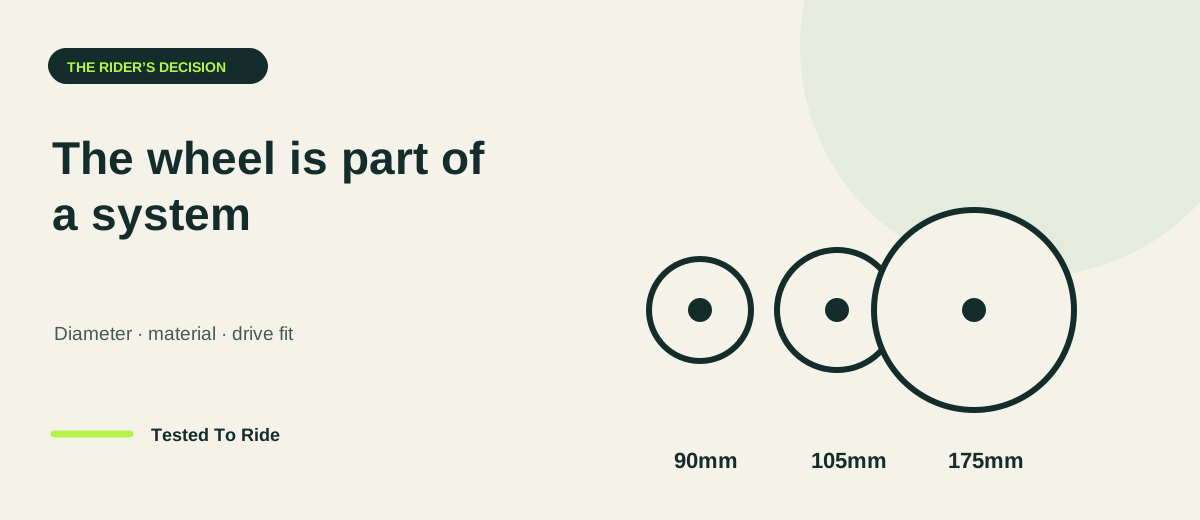
Diameter in perspective
Compare wheel sizes
105mm compared with a 180mm outline. The drawing compares diameter only; it does not rate grip, comfort or compatibility.
Name the surface problem
Separate coarse asphalt vibration, joints, broken edges, loose material and genuinely uneven terrain. Those are different questions for wheels and the rest of the board. Inspect the route and the manual’s restrictions before treating a larger diameter as a solution.
A full-length street board on 105mm wheels remains a street configuration. A pneumatic AT setup changes the tyre system and often the platform, carrying requirements and maintenance. Neither description proves that a particular obstacle or trail is suitable.
Street wheels and motor sleeves
Compare diameter, width, material description and hardness where published, but keep those labels separate from a measured comfort result. On a hub board, the driven sleeve also has to fit the motor system; a matching front-wheel size does not establish that compatibility.
The base G2’s 96mm wheels, the Ultra Hub’s 105mm donut setup and WowGo’s distinct 90mm/105mm packages illustrate the need to identify the order. Buying a two-wheel-set kit changes box contents; it is not evidence that a basic listing includes every option shown in the gallery.
A 90mm-to-105mm change is more than a comfort claim
The diameter ratio is 105 ÷ 90, approximately 1.167. At the same wheel rotation rate, the larger diameter covers about 16.7% more ground per turn. That geometry is not proof of a 16.7% top-speed increase: gearing, controller settings, load and available power can change the actual result.
Theoretical radius rises by 7.5mm, but that alone is not a verified clearance measurement on the complete board. Check the actual wheel path, deck/truck clearance and the manufacturer’s supported setup. A change can also require different sleeves or pulleys and corresponding settings.
I would not promise softer vibration or shorter stopping distance solely from diameter. Material, construction, contact behaviour and the whole board matter. A braking comparison needs a defined method, speed, surface and load, rather than a chart that turns wheel size into a performance score.
The deck and trucks belong in the road-comfort decision
Start by describing the surface: repetitive fine vibration, expansion joints, isolated cracks or loose material. Those are different problems. Map the rough section and consider whether avoiding it is more practical than changing the entire wheel system.
Deck shape, usable stance and truck arrangement affect the rider’s interaction with the board, but materials or a marketing flex label do not establish a measured comfort result. Make the model and setup explicit when reading an owner account. A result on aftermarket wheels should not become a claim about the base kit.
Pneumatic tyres introduce pressure, tube and servicing requirements. Choose that platform when its permitted use and ownership plan fit the route, rather than assume it resolves every uncomfortable street. The pneumatic buying guide compares complete configurations instead of isolated tyre diameters.
Pneumatic tyres introduce another ownership routine
Check tyre and tube dimensions, valve, pressure instructions, puncture spares and the supported wheel assembly. A pump and spare tube are useful only when they match the actual system. Do not borrow an inflation value from another diameter or construction.
The selected Explorer uses 175mm pneumatic wheels and the Zeus Pro AT uses a six-inch kit. Compare each complete assembly and its service requirements rather than generalise from the word all-terrain. Their exact board masses remain purchase checks.
Confirm the complete change
A wheel change can involve pulley fit, belt length, clearance and control calibration. Use the current instructions for the board, drive and remote, and ask support to confirm unsupported combinations. A wheel that bolts on is only one part of the compatibility question.
Keep the original setup and replacement identities in your records. If displayed speed or distance depends on the wheel setting, an incorrect setting undermines the numbers as well as the ownership comparison.
When I would buy the wheel option
I would pay for a supported wheel package when it addresses a known route requirement and the rest of the board remains suitable. I would change the route or platform instead if the surface exceeds the instructions. Wet grip and water ingress need their own checks, regardless of wheel size.
Use the pneumatic-platform guide for specialist setups and the rain and water explanation before relying on an IP or rough-road claim.
Questions about this task
Which wheel is best for braking?
There is no verified braking-wheel winner in this comparison. Diameter alone cannot establish stopping performance; the complete board, speed, surface and load matter. Keep a measured braking result attached to the exact setup and test conditions.
Can any Kegel-style wheel be fitted to a belt board?
No. The wheel needs a supported pulley, belt, clearance and controller setting for that board. A Kegel-style core name alone does not establish fit. Include any required hardware when comparing upgrade costs.